PLAY-BASED CURRICULUM


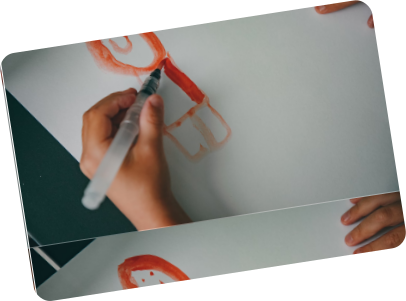
Children don't all learn the same way. At Canby Learning Tree and Little Explorers, we've built our entire program around that truth. Guided by Howard Gardner's Theory of Multiple Intelligences, we recognize nine distinct ways children make sense of the world: visual-spatial, verbal-linguistic, logical-mathematical, bodily-kinesthetic, musical-rhythmic, interpersonal, intrapersonal, emotional, and naturalistic. Rather than teaching to a single learning style, our teachers design lessons that invite every child to engage through their own strengths while gently stretching them to grow in all the others.
Our approach is rooted in Developmentally Appropriate Practice (DAP), as defined by the National Association for the Education of Young Children (NAEYC) - a framework grounded in research on how young children develop and learn, and what education science tells us is most effective. This means we meet each child exactly where they are, offering experiences that are challenging enough to stretch their thinking, but never so advanced as to cause frustration or stress.
We draw further inspiration from the Reggio Emilia philosophy, which views the classroom environment as the "third teacher." Our spaces are intentionally designed with natural materials, open-ended loose parts, and aesthetically rich displays of children's work, because when a child feels respected by their environment, they engage more deeply with it.
Beyond being enjoyable and engaging, early education offers a wide range of cognitive, academic, and social benefits:

A large-scale longitudinal study tracking individuals across five age cohorts found that children who attended Reggio Approach preschools showed significantly stronger outcomes in socio-emotional skills, high school graduation rates, and long-term employment compared to children who received no formal early childhood care.¹
Research published in peer-reviewed early childhood journals found that children in DAP classrooms demonstrate greater mastery across communication, daily living, social, and motor skills - and report a significantly higher sense of their own competence - than children taught in developmentally inappropriate settings.²
A review of 35 years of neuroscience research confirmed that Gardner's multiple intelligences map onto distinct neural pathways in the brain. Designing learning experiences that activate multiple intelligences serves as delivery routes for attention, memory, motivation, and creative problem-solving - core outcomes of a high-quality early childhood program.³

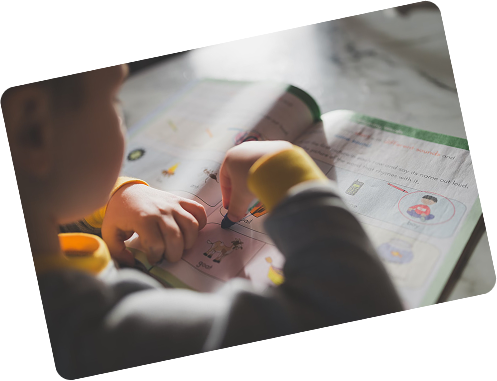

A CLASSROOM BUILT AROUND YOUR CHILD
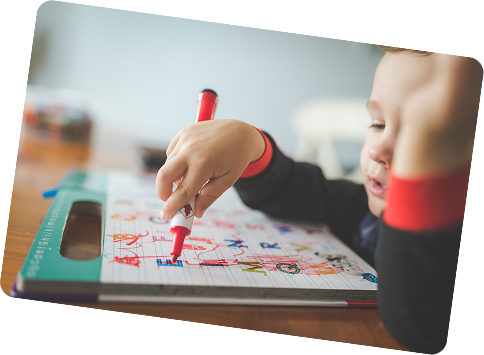
In Canby, children ages 3 and up learn together, sometimes in mixed-age classrooms. This structure is one of the most powerful things we offer. Not all 3-year-olds are in the same place developmentally, socially, or academically, and mixed-age groupings honor that reality. Children can be grouped for play and learning with peers at a similar level, reducing frustration and the kind of performance pressure that can undermine a child's confidence and love of learning.
Older children have the opportunity to become role models, reinforcing their own knowledge by helping younger friends. Younger children gain the confidence of seeing peers who have already mastered what they are working toward. And because children remain in the same classroom for more than one year, they build deep, lasting relationships with both their teachers and their classmates. These bonds create the kind of trust and security that allow real learning to flourish.
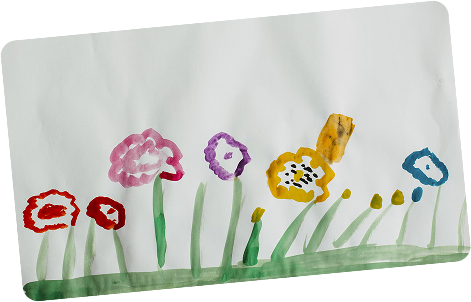
Our thematic explorations are driven by the children themselves. We follow their curiosity into a wide variety of subjects: from rockets and rainforests to bread-baking, car engines, fairy tales, and beyond. Documentation of children's ideas and discoveries takes many forms: transcribed conversations, classroom portfolios, Bookworks, and artwork displays that are revisited and built upon throughout the year.
It's important to us that every child leaves our program with a genuine love of learning: the kind of curiosity and confidence that will carry them all the way through Kindergarten and beyond.

1 Biroli, P., Del Boca, D., Heckman, J.J., et al. (2018). Evaluation of the Reggio Approach to Early Education. Research in Economics, 72(1), 1–32. National Bureau of Economic Research.
2 Marcon, R.A. (2002). Moving Up the Grades: Relationship Between Preschool Model and Later School Success. Early Childhood Research & Practice; cited in Buldu, M. (2013). National Board Certification and Developmentally Appropriate Practices. PMC / Early Childhood Education Journal.
3 Helding, L. (2019). Multiple Intelligences in Teaching and Learning: Lessons Learned from Neuroscience. Journal of Singing / PMC National Institutes of Health.